The date.
We confirm availability for the shoot date and the actual conditions of the job.


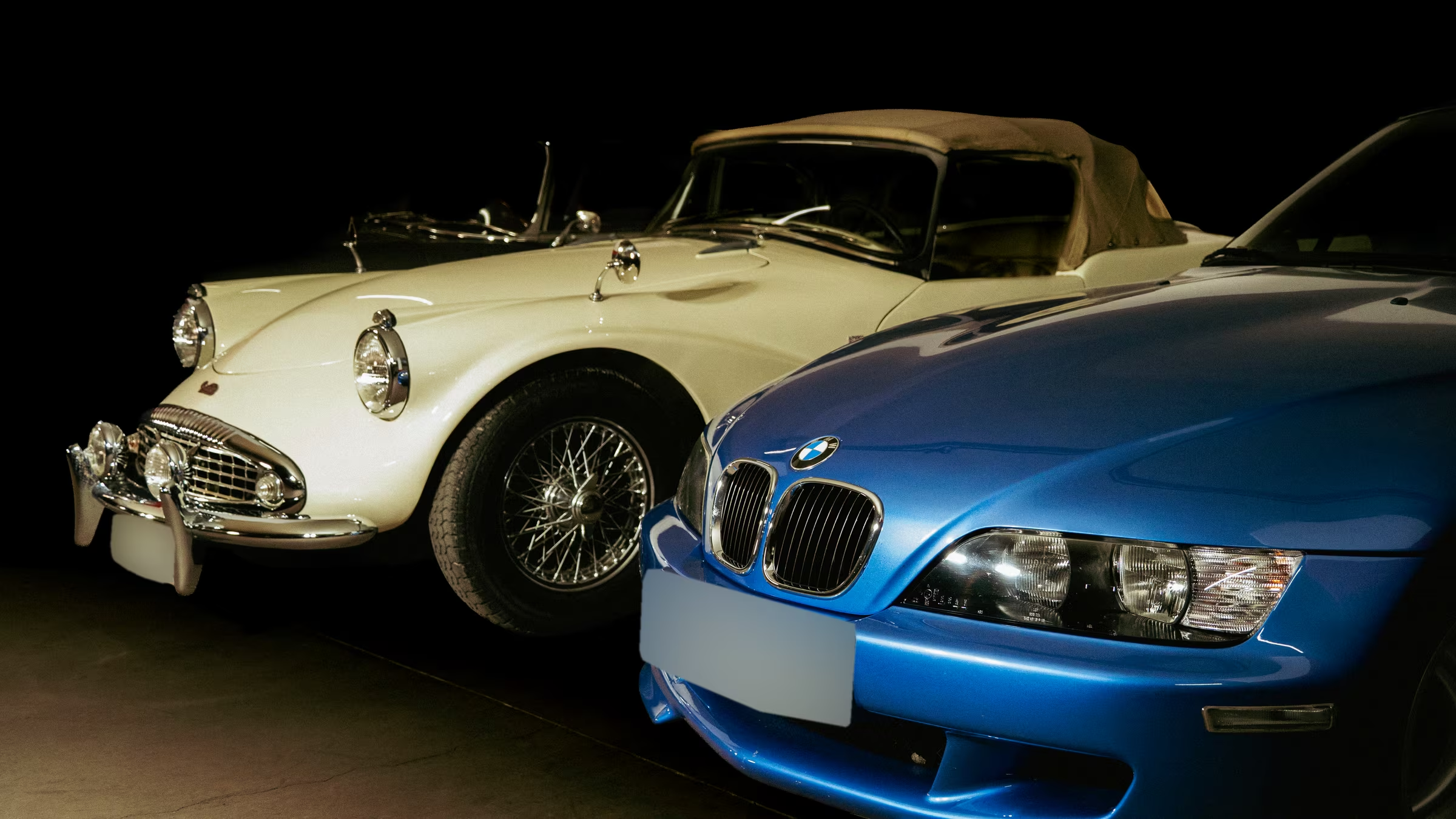
PRODUCTION
A picture car is not there simply to fill the frame. It has a job to do on camera. Art department chooses the period, colour and silhouette; production needs to know the car will arrive prepared, insured for the agreed use and accompanied by someone who knows it.
WHAT MATTERS
Before the fee comes certainty. There are three things production needs to close before a car can go on the call sheet.
The date.
We confirm availability for the shoot date and the actual conditions of the job.
Insurance.
The working format and corresponding insurance are agreed before the booking is closed.
Whether it runs.
If the shot requires the car to move, we establish in advance whether it can do so and under what conditions.
SHOOT FORMATS
A car does not do the same job on every production. The right choice depends on the shot, the period, its time on camera and whether it needs to move.
Usually built around a precise visual reference and a tightly planned shoot day.
We work backwards from the required shot to establish the car, working format and conditions in advance.
The car may need to deliver pure visual presence, repeated movement, or both.
We define exactly what it will do in the scene and plan the day around that use.
Silhouette, colour and period read can matter as much as the badge.
Art department can shortlist by era and character before production closes availability and working terms.
The car often works as shape, backdrop or contrast within the composition.
If it does not need to move, a static booking can make the setup significantly simpler.
Exterior condition, reflections, interiors and physical access around the car become especially important.
We establish which areas will be on camera and how they need to be used before the shoot.
The brief can range from a static hero image to a complete driving sequence.
The job is scoped around what the car actually has to do, rather than simply having it present.
The priority may be period, visual authenticity or the car's relationship to a particular story.
The aim is to find a car that supports that context rather than reading as generic vintage dressing.
CASTING
This is not the technical fleet register. This is the casting sheet. The question here is not what the car is, but what happens when it enters frame.
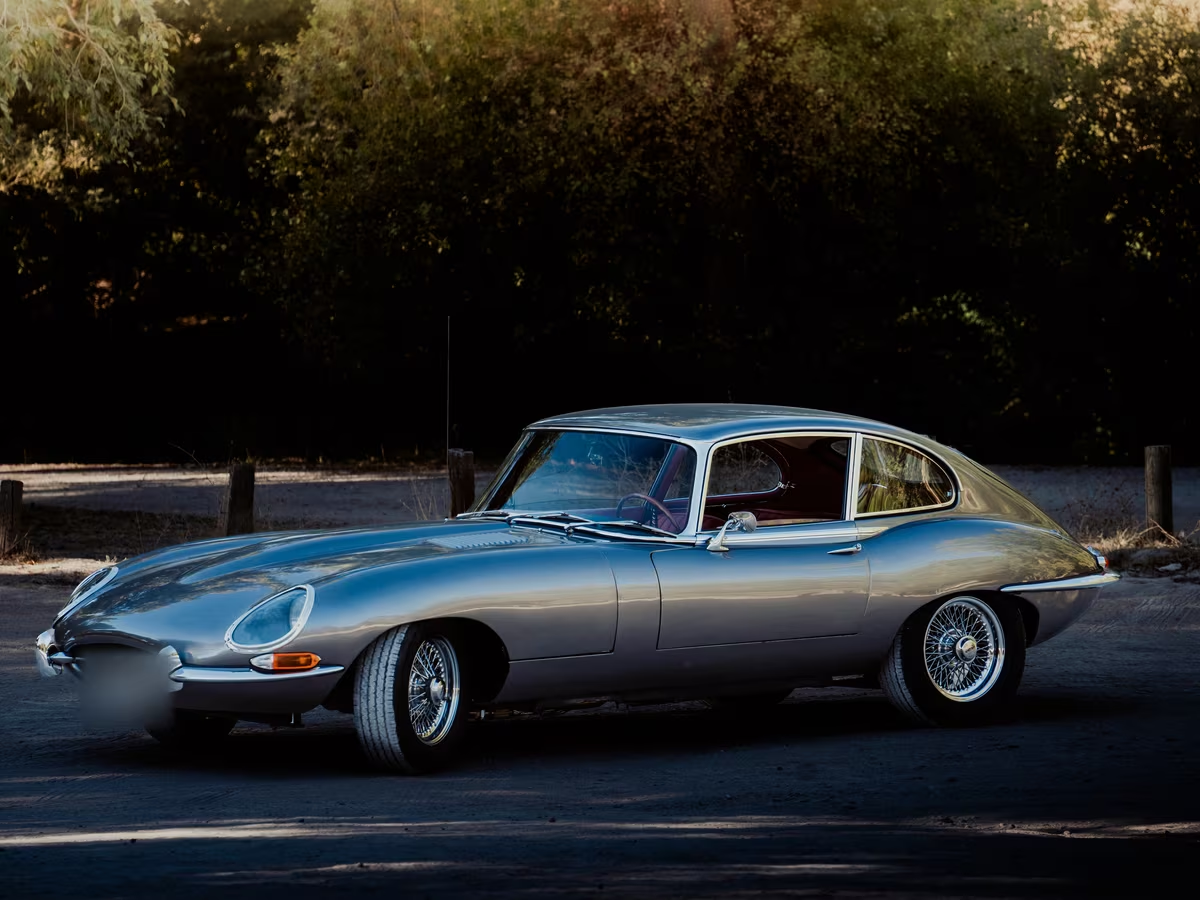
The role: British elegance and a silhouette strong enough to carry a frame without excess.
Best on camera: Hotels, villas, open road and scenes that need visual sophistication.
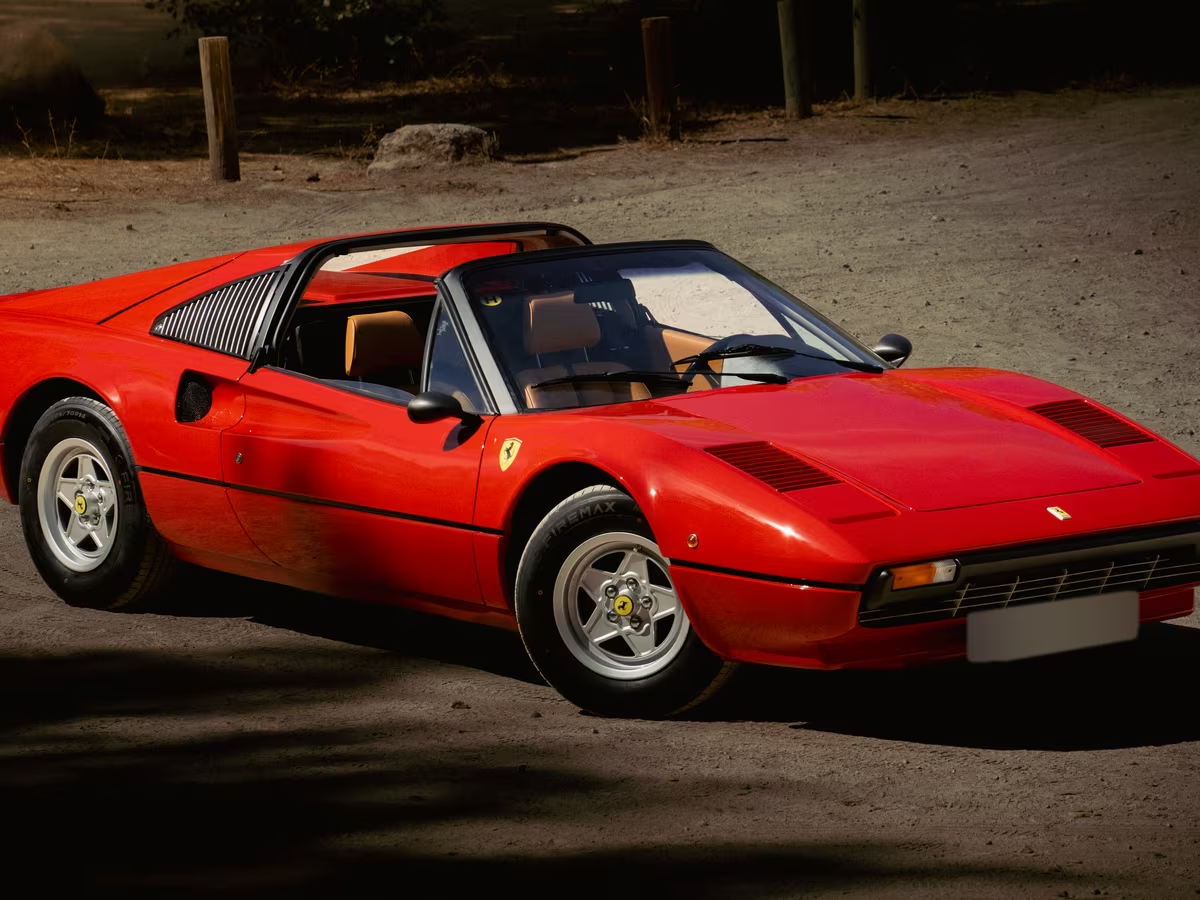
The role: An instantly readable Italian sports car when the vehicle needs to feel like a protagonist.
Best on camera: Commercials, music videos, lifestyle and character entrances with strong visual presence.
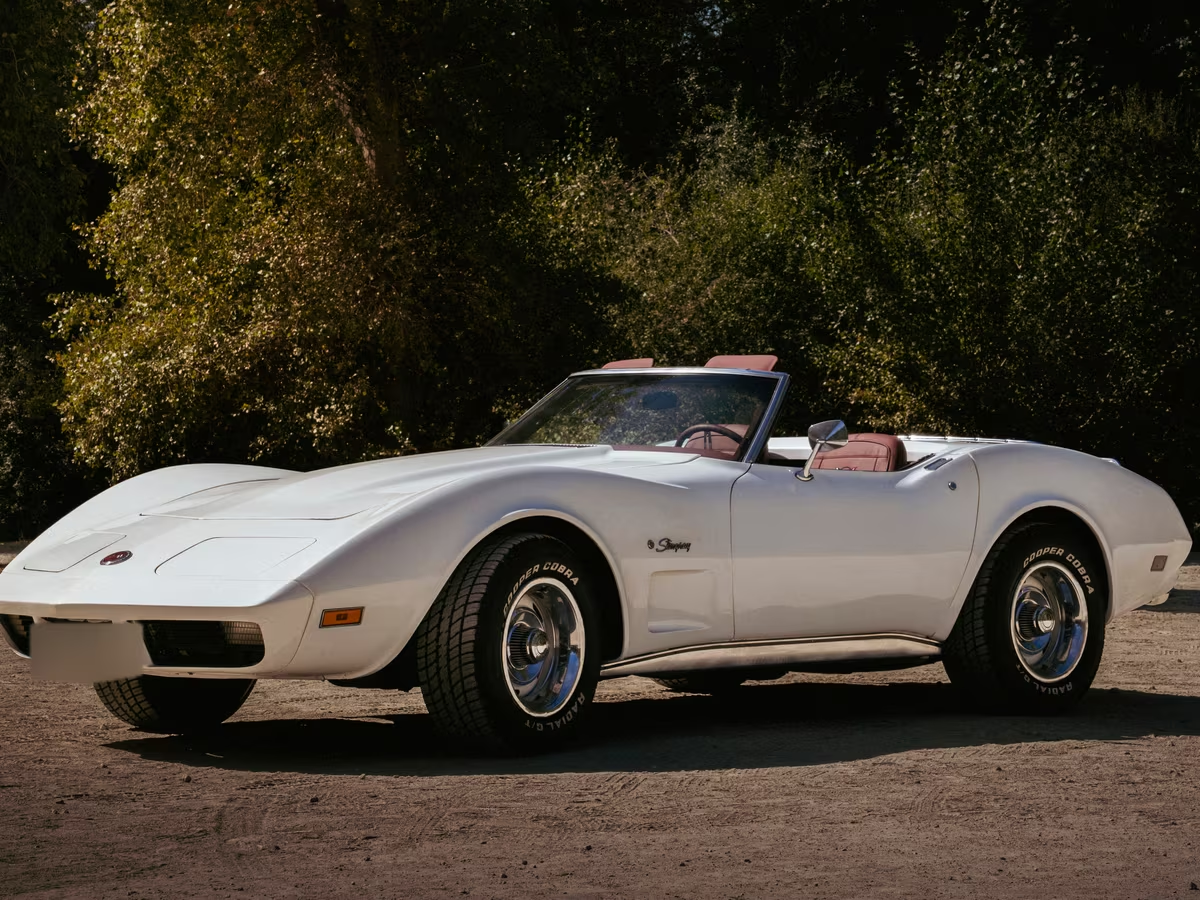
The role: Recognisable American sports-car presence with a strong screen silhouette.
Best on camera: Road work, petrol stations, urban scenes and clean profile or three-quarter shots.
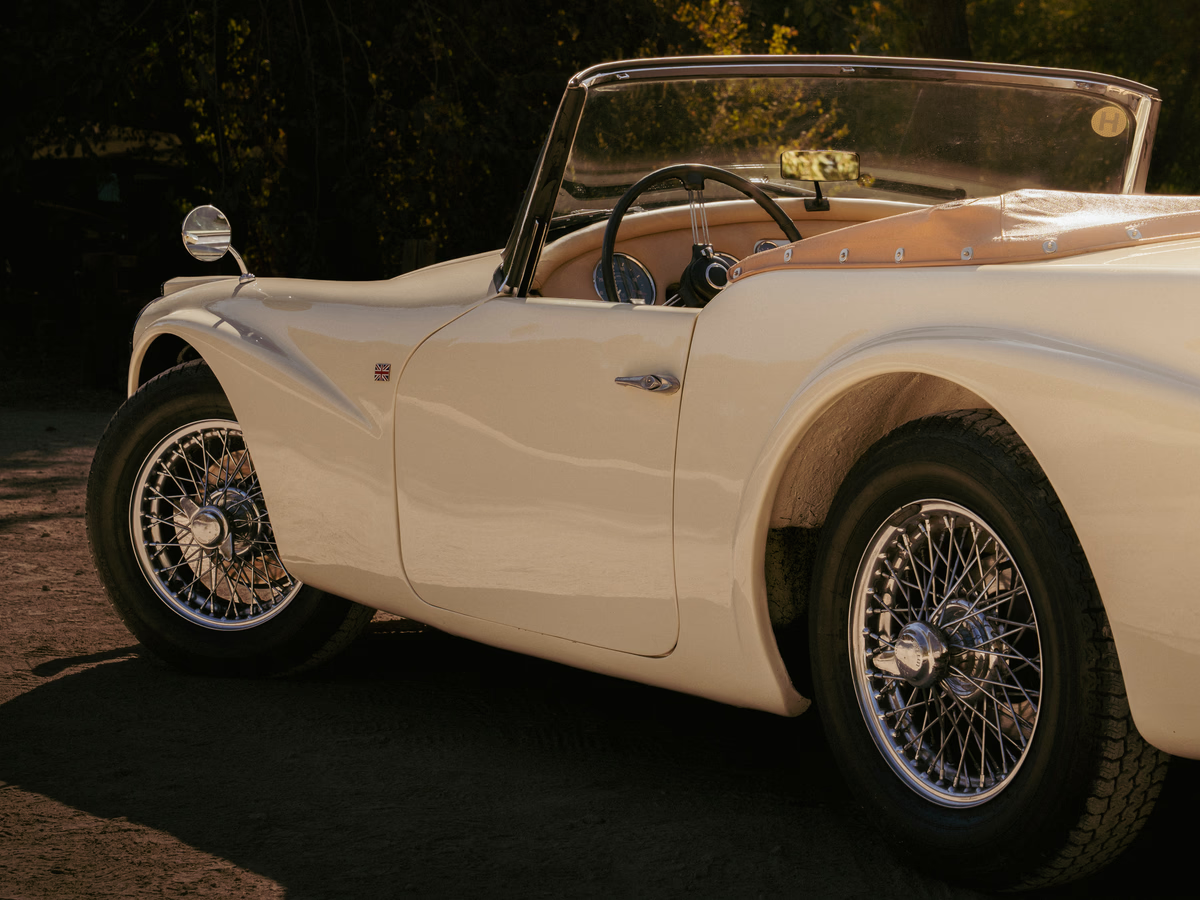
The role: A distinctive British roadster for a less obvious classic read.
Best on camera: Period-oriented frames, editorial work and scenes that need a characterful piece.
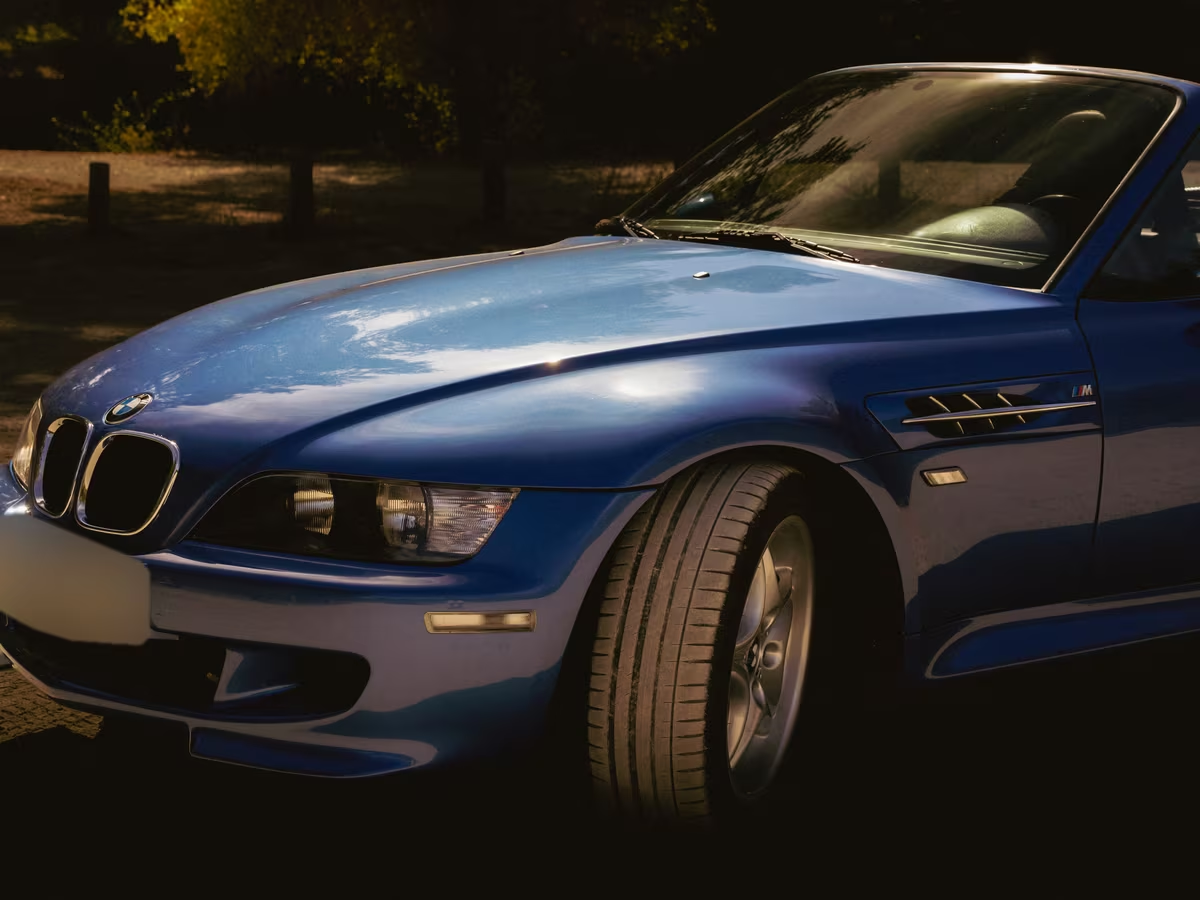
The role: A more recent sports-roadster read within the collection.
Best on camera: Lifestyle, road work, advertising and scenes calling for a contemporary-retro feel.
CASTING CRITERIA
Make and model are rarely the best first filter. Start with what the scene actually requires.
Does it need to drive on camera?
Separate a moving shot from a purely visual appearance from the start.
Period.
What era should the car read as, and how much flexibility does art department have?
Colour.
How does it sit within the palette and how much visual weight should it carry?
Usable interior.
If actors, dialogue or a camera need to go inside, that belongs in the initial brief.
Seats.
Relevant whenever occupants are part of the action rather than the car simply appearing in shot.
If the model has not been chosen yet, these criteria are a better place to begin the shortlist.
TWO FORMATS
These are two different products because they solve two different production needs. Static is not a cut-down version of a driving day.
The car moves on camera and becomes part of the action.
This carries the highest operational requirements: driving, insurance and the conditions of the shot must all be defined before the shoot day is closed.
The car works as a visual object and does not move under its own power during the job.
It suits displays, trade fairs, launches, editorials and product photography. The simpler operating requirements also make the car accessible to budgets for which a full driving shoot day would make little sense.
SCOPE
The quote separates the standard scope from anything created by the particular shoot. Production can see from the start what belongs to the booking and what is additional.
PROCESS
The earlier we know what the car needs to do, the earlier production can close the important variables. The process deliberately separates creative selection from production terms.
Shoot date, location, production type, car or visual reference and, most importantly, what the car needs to do on camera.
We check the car and establish whether the job is driving or static. Any condition affecting its use should be identified here.
Production receives the agreed scope, additional cost items and applicable conditions of use.
The car arrives prepared for the agreed work and with someone who knows it.
WORKING CRITERIA
Cars in this collection can work on camera, but the intended use is agreed before the shoot. Movement, route, surface, weather, interior access and any special action all form part of that conversation. If the shot changes on set, the new use needs to be cleared before it happens.
PRODUCTION FAQ
These are the points worth settling before the car appears on the shooting schedule.
Availability is confirmed by car and shoot date. Send the date, location and intended use and we can check it.
That depends on the car and what the shot requires. On-camera driving must be agreed in advance, and where a dedicated driver is required this is quoted separately.
Insurance is arranged according to the agreed working format. The precise scope needs to be established before the shoot.
We work on full-day and half-day engagements rather than an hourly rental rate.
That depends on the car, location and conditions of the job. Where a transporter is required, it is quoted separately.
Potentially, but it needs to be part of the brief from the start. We need to know the action, number of occupants and what the camera department needs to do inside.
Yes. The engagement is invoiced with VAT.
That depends on the weather, the working format and when the change occurs.
AVAILABILITY
Send the date, location and either the car you have in mind or a visual reference for the scene. Tell us whether it needs to move, who will appear with it and what action it needs to perform. From there we can discuss availability, working format and the actual conditions of the job.